
SEARCH
OUR SERVICE
TECNOLOGY
IECEx Certificate
|
I. What is IECEx? IECEx is the abbreviation of the International Electrotechnical Commission (IEC) Certification System for Standards Relating to Equipment for Use in Explosive Atmospheres. It specializes in the safety certification of explosion-proof products. Its purpose is to eliminate differences in equipment and services used in flammable and explosive environments across countries around the world, on the premise of ensuring the safety level of explosion-proof products. It also removes the need for repeated inspection and certification when explosion-proof products enter different countries or regions, thereby promoting international trade. The current IECEx explosion-proof standards mainly include the IEC 60079 and ISO 80079 series.
|
 |
The certificate (CoC) issued by IECEx consists of an Explosion-Proof Test Report (ExTR) and a Quality Audit Report (QAR). The QAR is directly issued by an Ex Certification Body (ExCB), while the ExTR is issued by an Ex Testing Laboratory (ExTL) contracted by the ExCB and then reviewed and approved by the ExCB.
In the IECEx system, ExCBs and ExTLs of all member countries work collaboratively. Enterprises can apply for a CoC from an ExCB by submitting the ExTR and QAR.
II. What are the Benefits of IECEx Certification?
1. High Global Recognition: IECEx Certification is widely recognized by more than 30 member countries (e. g. , Australia, New Zealand, Brazil, Canada, China, Russia, Japan, South Korea, Malaysia, Singapore, South Africa, etc. ).
2. Fast Supplementary Certification: For the few regions that do not accept IECEx Certification, only supplementary differential test reports are required instead of full re-testing, which reduces manufacturers’ certification costs and time-to-market.
3. International Authoritative Endorsement: The IECEx mark is a globally recognized certification mark for explosion-proof safety. It can be displayed on products, product manuals, and promotional materials, enhancing the trust of consumers, purchasers, and regulatory authorities in product safety.
4. Long-Term Cost Amortization: Although the initial certification cost is relatively high, it can eliminate repeated certifications, accelerate product launch cycles, and boost market acceptance, thus significantly amortizing costs in the long run.
5. Transparent Certification Information: All IECEx certificates can be queried on the official website, providing enterprises with a free international promotion channel and strengthening brand credibility.
III. Interpretation of Key Sections of an IECEx Certificate
1. Certificate No: Certificate number, unique and can be queried and downloaded on the IECEx official website.
2. Status: Certificate status, marked as current (certificate valid) or cancelled (certificate revoked).
3. Issue No: Issue number, indicating the number of certificate revisions. 0 means the certificate is issued for the first time, with subsequent numbers indicating subsequent revisions.
4. Date of Issue: Certificate issuance date, which serves as the certificate’s effective date.
5. Certificate History: This section records all issuance history and corresponding dates of the certificate, facilitating the tracking of certificate changes.
6. Applicant: Displays the name and address of the certificate applicant. Usually, the applicant is the manufacturer, but other organizations (including OEMs or ODMs) are also allowed to act as applicants.
7. Equipment or Ex Component: This section details the name, model, and other information of the certified equipment or components. If there is a large amount of content, supplementary details can be provided in the certificate annex.
8. Type of Protection: The explosion-proof protection type of the equipment.
9. Marking: The explosion-proof marking of the equipment.
10. Approved for issue on behalf of the IECEx Certification Body: This section shows the authorized signatory issuing the certificate on behalf of the certification body.
V: Standard lists of IECEx Certificate
1. IEC 60079-0 Explosive atmospheres Part 0: Equipment-General requirements
2. IEC 60079-1 Explosive atmospheres Part 1: Equipment protection by flameproof endosures "d"
3. IEC 60079-2 Explosive atmospheres Part 2: Equipment protection by pressurized enclosure "p"
4. IEC 60079-5 Explosive atmospheres Part 5: Equipment protection by powder filling "q"
5. IEC 60079-6 Explosive atmospheres Part 6: Equipment protection by liquid immersion "o"
6. IEC 60079-7 Explosive atmospheres Part 7: Equipment protection by increased safety "e"
7. IEC 60079-11 Explosive atmospheres Part 11: Equipment protection by intrinsic safety "i"
8. IEC 60079-15 Explosive atmospheres Part 15: Equipment protection by type of protection "n"
9. IEC 60079-18 Explosive atmospheres Part 18: Equipment protection by encapsulation "m
10. IEC 60079-28 Explosive atmospheres Part 28: Protection of equipment and transmission systems using optical radiation
11. IEC 60079-31 Explosive atmospheres Part 31: Equipment dust ignition protection by enclosure "t"
12. IEC 60079-33 Explosive atmospheres Part 33: Equipment protection by special protection "s"
13. IEC ISO 80079-36:2016 Explosive atmospheres-Part 36: Non-electrical equipment for explosive atmospheres-Basic method and requirements (ISO 80079-36:2016)
14. IEC ISO 80079-37:2016 Explosive atmospheres-Part 37: Non-electrical equipment for explosive atmospheres-Non-electrical type of protection constructional safety ''c'', control of ignition sources ''b'', liquid immersion ''k'' (ISO 80079-37:2016)
etc.
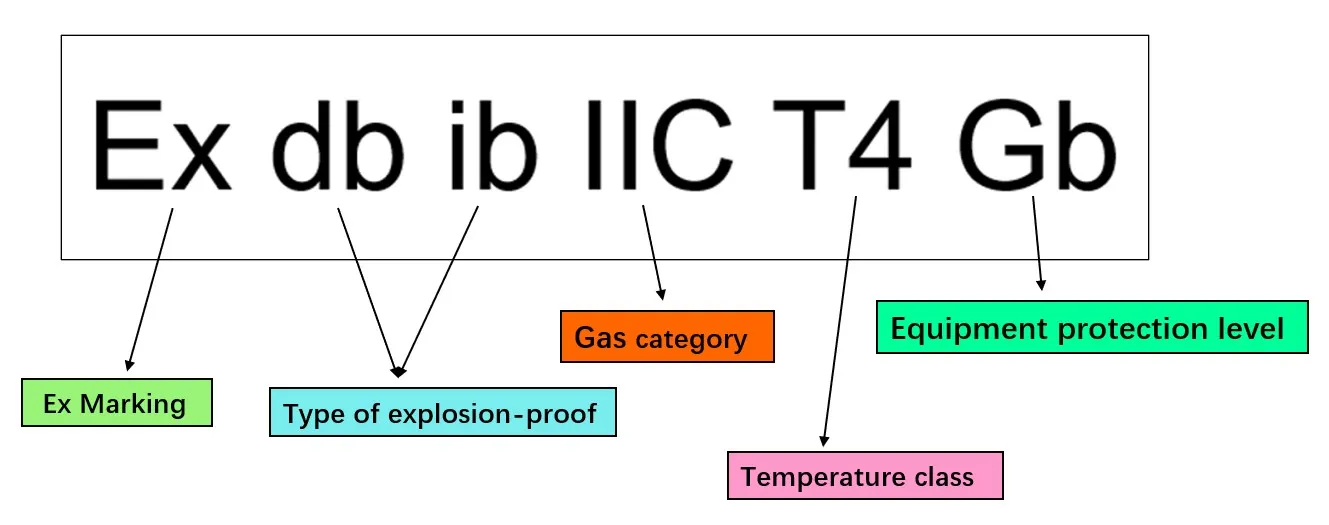
VI. IECEx Marking
VII. What is the relation between with IECEx and ATEX?
1. Scope of Application
ATEX certification applies to the European Union region, while IECEx certification applies to member countries of the IECEx system, including major economic powers such as China.
2. Mandatory or not
ATEX certification is mandatory, whereas IECEx certification is voluntary.
3. Conversion Validity
Currently, an ATEX certification certificate cannot be converted into certificates for other countries/regions outside the European Union. In contrast, IECEx member states directly or indirectly recognize IECEx certificates.
I. What is IECEx?
IECEx is the abbreviation of the International Electrotechnical Commission (IEC) Certification System for Standards Relating to Equipment for Use in Explosive Atmospheres. It specializes in the safety certification of explosion-proof products. Its purpose is to eliminate differences in equipment and services used in flammable and explosive environments across countries around the world, on the premise of ensuring the safety level of explosion-proof products. It also removes the need for repeated inspection and certification when explosion-proof products enter different countries or regions, thereby promoting international trade. The current IECEx explosion-proof standards mainly include the IEC 60079 and ISO 80079 series.
The certificate (CoC) issued by IECEx consists of an Explosion-Proof Test Report (ExTR) and a Quality Audit Report (QAR). The QAR is directly issued by an Ex Certification Body (ExCB), while the ExTR is issued by an Ex Testing Laboratory (ExTL) contracted by the ExCB and then reviewed and approved by the ExCB.
In the IECEx system, ExCBs and ExTLs of all member countries work collaboratively. Enterprises can apply for a CoC from an ExCB by submitting the ExTR and QAR.
II. What are the Benefits of IECEx Certification?
1. High Global Recognition: IECEx Certification is widely recognized by more than 30 member countries (e. g. , Australia, New Zealand, Brazil, Canada, China, Russia, Japan, South Korea, Malaysia, Singapore, South Africa, etc. ).
2. Fast Supplementary Certification: For the few regions that do not accept IECEx Certification, only supplementary differential test reports are required instead of full re-testing, which reduces manufacturers’ certification costs and time-to-market.
3. International Authoritative Endorsement: The IECEx mark is a globally recognized certification mark for explosion-proof safety. It can be displayed on products, product manuals, and promotional materials, enhancing the trust of consumers, purchasers, and regulatory authorities in product safety.
4. Long-Term Cost Amortization: Although the initial certification cost is relatively high, it can eliminate repeated certifications, accelerate product launch cycles, and boost market acceptance, thus significantly amortizing costs in the long run.
5. Transparent Certification Information: All IECEx certificates can be queried on the official website, providing enterprises with a free international promotion channel and strengthening brand credibility.
III. Interpretation of Key Sections of an IECEx Certificate
1. Certificate No: Certificate number, unique and can be queried and downloaded on the IECEx official website.
2. Status: Certificate status, marked as current (certificate valid) or cancelled (certificate revoked).
3. Issue No: Issue number, indicating the number of certificate revisions. 0 means the certificate is issued for the first time, with subsequent numbers indicating subsequent revisions.
4. Date of Issue: Certificate issuance date, which serves as the certificate’s effective date.
5. Certificate History: This section records all issuance history and corresponding dates of the certificate, facilitating the tracking of certificate changes.
6. Applicant: Displays the name and address of the certificate applicant. Usually, the applicant is the manufacturer, but other organizations (including OEMs or ODMs) are also allowed to act as applicants.
7. Equipment or Ex Component: This section details the name, model, and other information of the certified equipment or components. If there is a large amount of content, supplementary details can be provided in the certificate annex.
8. Type of Protection: The explosion-proof protection type of the equipment.
9. Marking: The explosion-proof marking of the equipment.
10. Approved for issue on behalf of the IECEx Certification Body: This section shows the authorized signatory issuing the certificate on behalf of the certification body.
V: Standard lists of IECEx Certificate
1. IEC 60079-0 Explosive atmospheres Part 0: Equipment-General requirements
2. IEC 60079-1 Explosive atmospheres Part 1: Equipment protection by flameproof endosures "d"
3. IEC 60079-2 Explosive atmospheres Part 2: Equipment protection by pressurized enclosure "p"
4. IEC 60079-5 Explosive atmospheres Part 5: Equipment protection by powder filling "q"
5. IEC 60079-6 Explosive atmospheres Part 6: Equipment protection by liquid immersion "o"
6. IEC 60079-7 Explosive atmospheres Part 7: Equipment protection by increased safety "e"
7. IEC 60079-11 Explosive atmospheres Part 11: Equipment protection by intrinsic safety "i"
8. IEC 60079-15 Explosive atmospheres Part 15: Equipment protection by type of protection "n"
9. IEC 60079-18 Explosive atmospheres Part 18: Equipment protection by encapsulation "m
10. IEC 60079-28 Explosive atmospheres Part 28: Protection of equipment and transmission systems using optical radiation
11. IEC 60079-31 Explosive atmospheres Part 31: Equipment dust ignition protection by enclosure "t"
12. IEC 60079-33 Explosive atmospheres Part 33: Equipment protection by special protection "s"
13. IEC ISO 80079-36:2016 Explosive atmospheres-Part 36: Non-electrical equipment for explosive atmospheres-Basic method and requirements (ISO 80079-36:2016)
14. IEC ISO 80079-37:2016 Explosive atmospheres-Part 37: Non-electrical equipment for explosive atmospheres-Non-electrical type of protection constructional safety ''c'', control of ignition sources ''b'', liquid immersion ''k'' (ISO 80079-37:2016)
etc.
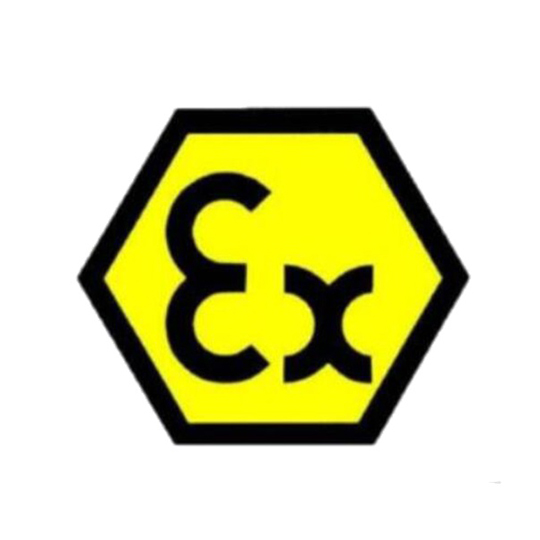
VI. IECEx Marking
VII. What is the relation between with IECEx and ATEX?
1. Scope of Application
ATEX certification applies to the European Union region, while IECEx certification applies to member countries of the IECEx system, including major economic powers such as China.
2. Mandatory or not
ATEX certification is mandatory, whereas IECEx certification is voluntary.
3. Conversion Validity
Currently, an ATEX certification certificate cannot be converted into certificates for other countries/regions outside the European Union. In contrast, IECEx member states directly or indirectly recognize IECEx certificates.
Give us a free quote
Submit this form and our sales representative will contact you soon.
Service
Contact Information
Shenzhen Sino Testing Services Co., Ltd.
Tel:
+86 199 2539 5926
WeChat: 19925395926
Address: 13F, Building C, Kangjia Guangming Technology Center, No. 288 Xingxin Road, Guangming District, Shenzhen, Guangdong, China.
Contact us
Official Account
Tik Tok
Xiaohongshu
Copyright © 2026 Shenzhen Sino Testing Services Co., Ltd.